
Collectr App Review: Is It Accurate for Pokémon Cards? (2026)
You have a binder. Maybe three. Maybe a shoebox under the bed that your mom keeps calling “the Pokémon box.” And you have no idea what any of it is worth.
So you start googling cards one at a time. Charizard. Then Umbreon. Then that weird shiny Magikarp you pulled in 2023. Twenty minutes later you have eleven tabs open, three prices for the same card, and zero confidence.
It gets worse. Prices move every day. The card you looked up last month might be worth half as much now, or double. And if you trade at a card show without knowing your numbers, the guy across the table probably does know his. Guess who walks away happy.
That’s the itch Collectr promises to scratch. It turns your collection into something that looks a lot like a stock portfolio, with a live total, charts, and daily gains and losses. The big question is the one everyone on Reddit keeps asking: is Collectr actually accurate?
For this Collectr app review, I dug through Collectr’s official site, its App Store and Google Play listings, and a pile of real Reddit threads from collectors who use it. Quick note: this is a research-based review, not a hands-on test. Here’s what the evidence says.
Quick Verdict
Collectr is a free app (with an optional Collectr Pro plan at $7.99 a month or $59.99 a year) that tracks the value of your Pokémon cards, graded slabs and sealed product like a stock portfolio. Its prices lean mainly on TCGplayer data for raw cards and eBay for graded cards, so it’s generally reliable for modern Near Mint cards but can drift on vintage, Japanese and played cards. Use it to organize and track your collection, and double-check eBay sold listings before you sell anything big.
What Is the Collectr App?
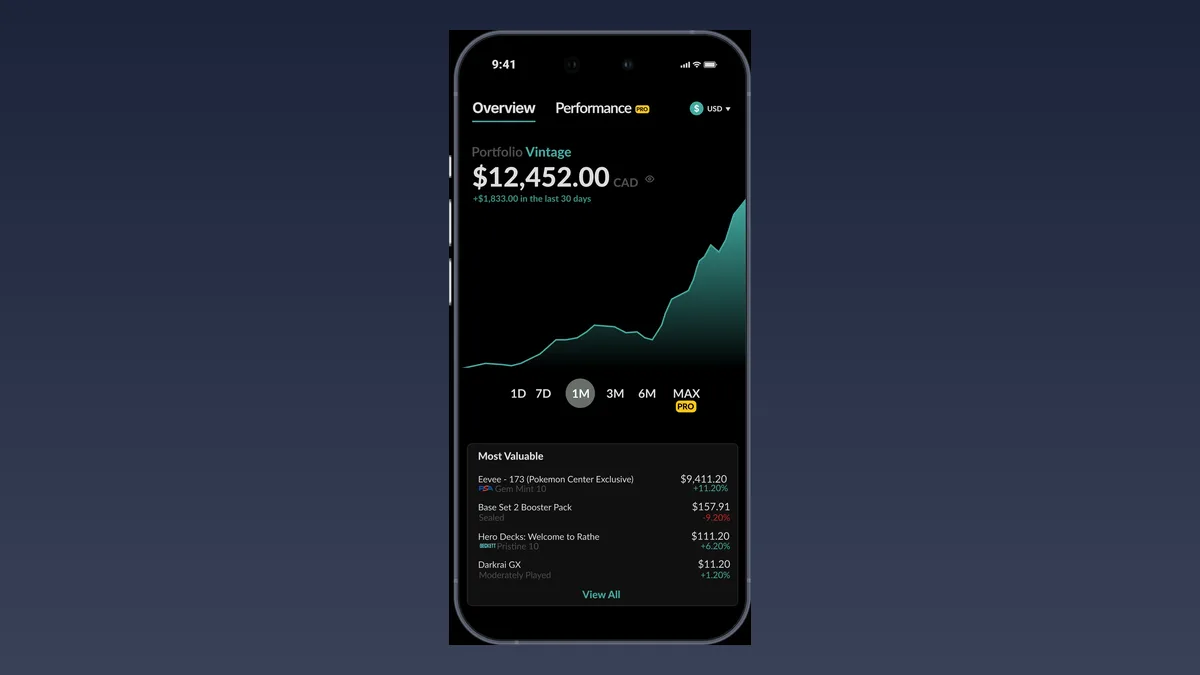
Collectr is a collection tracker and price guide for trading card games. It’s made by Collectr Inc, a company based in Vaughan, Ontario, Canada, according to its Google Play listing. It’s free to download on iPhone, iPad and Android, with paid upgrades inside the app.
The app calls itself a “next-generation portfolio manager.” In plain words: you add your cards, and Collectr tells you what the whole pile is worth, then keeps updating that number.
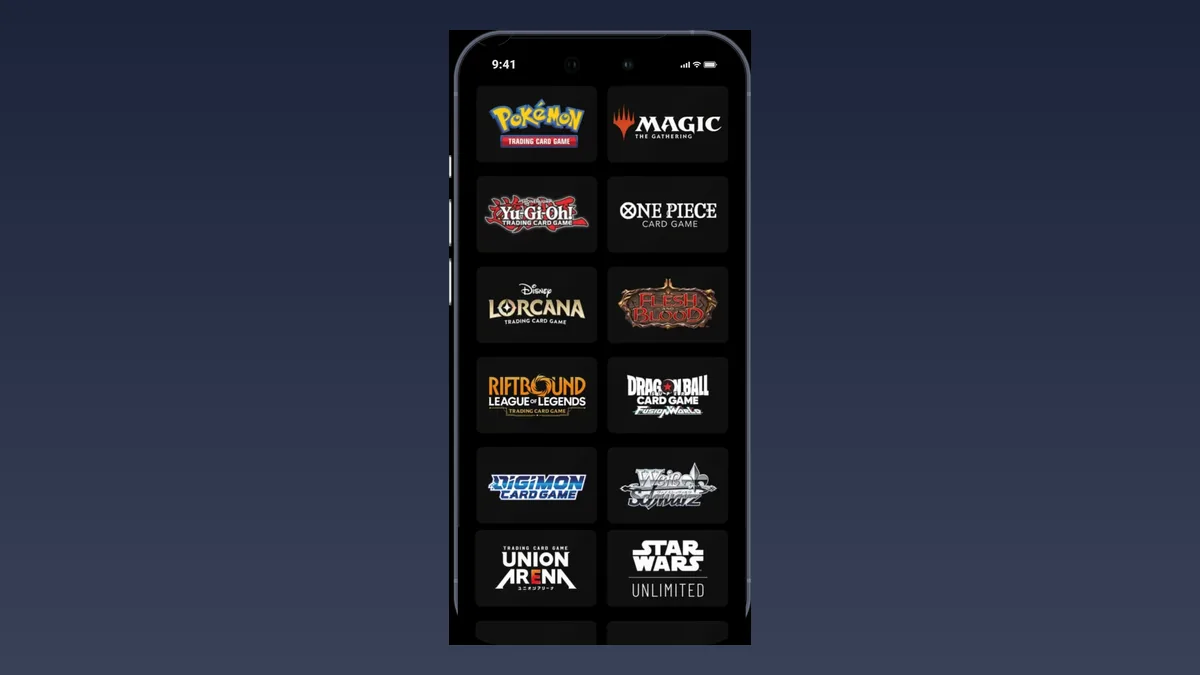
It isn’t just a Pokémon app. Collectr’s website says it covers 25+ trading card games, and its store listings name games like:
- Pokémon
- Magic: The Gathering
- Yu-Gi-Oh!
- One Piece
- Disney Lorcana
- Flesh and Blood, Digimon, Dragon Ball Super and Star Wars Unlimited
- Even Funko
It handles raw cards, graded cards and sealed product, and its store listings say it pulls from a database of 1,000,000+ products.
People seem to like it. As of October 15, 2026, Collectr shows 4.9 stars from about 68K ratings on the US App Store and 4.8 stars from about 43.8K reviews on Google Play.
Collectr App Features for Pokémon Collectors
Here’s what the Collectr app Pokémon fans actually get, minus the marketing fluff.
Card Scanning
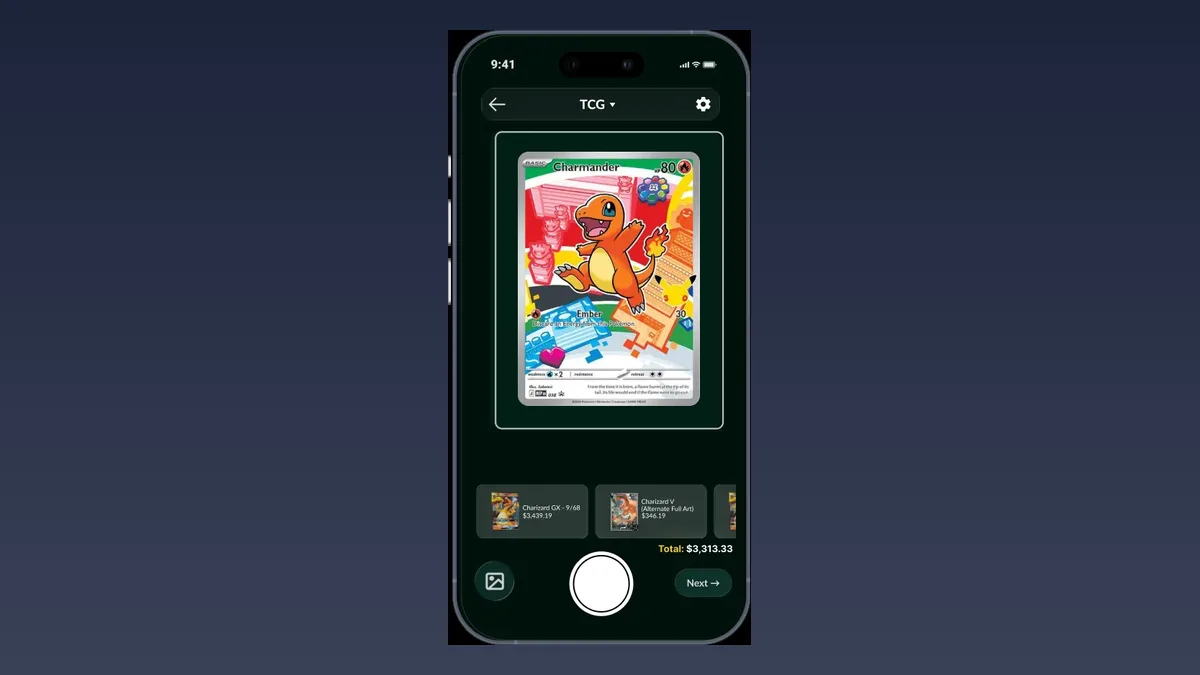
Point your phone camera at a card, and Collectr identifies the set, card number and variant, then adds it to your collection. Its website says it can tell Normal, Foil and Reverse Foil printings apart and lets you set quantity and condition as you add.
This is the feature reviewers mention most. It’s also the one with a catch on the free plan (more on that below).
Portfolio Tracking
This is the heart of the app. Collectr shows:
- A live total value for each portfolio, grouped by game
- Charts over time, from one day to all-time
- Cost basis and gains/losses, so you can see if you’re actually up
- Most Valuable and Trending Today lists
- Multi-currency support, including crypto, per its store listing
You can run separate portfolios, like one for your personal binder and one for trade stock.
Price Guide, Graded Comps and Pop Reports
Each card page lets you toggle between raw and graded prices, check population reports, and open sold listings. Collectr Pro unlocks up to 5+ years of price history on raw and graded cards. A recent update also added a “Compare Grades” view and a “Gem Rate” for graded cards.
Sealed Product Tracking
Booster boxes, Elite Trainer Boxes and premium collections sit in your portfolio right next to your singles. If you collect sealed, this is a big deal.
Trade Analyzer
Add the cards on each side of a trade, and a fairness meter tells you who the deal favors, down to the dollar. You can add cash to balance it, set condition and grade, and override any price you disagree with. Collectr’s website says it’s free to use.
Price Alerts, Marketplace and Social
The latest updates added price alerts, so you get a ping when a card hits your target. There’s also a marketplace view that shows eBay and TCGplayer listings side by side, plus a social feed and shareable “Showcase” pages for your collection.
Is Collectr Accurate for Pokémon Cards?
This is the part you came for. Short answer: it depends on what kind of card you have.
Where Collectr Gets Its Prices
Collectr’s web app carries this line: “This product uses TCGplayer data but is not endorsed or certified by TCGplayer.” In a Reddit thread on r/Collectr, a user replying as part of the Collectr team said they rely on TCGplayer as the main source for raw cards and some sealed, and eBay for graded cards. (Reddit doesn’t verify who works where, so treat that as a strong hint, not gospel.)
That matters, because TCGplayer’s Market Price is based on recent actual sales, averaged across transactions, with outliers ignored. That’s a solid base, but it’s also a US marketplace number.
Where It Shines
Across several Reddit threads, the most common opinion is pretty consistent:
- Modern Near Mint cards that sell every day tend to be close
- Sealed product gets good marks from many users
- It works well as a ballpark number for your whole collection
One r/Collectr user who sold a batch of sealed product said they compared their Collectr values to the average of the last three eBay sales, and over the whole list the difference was about 1%. Some items were higher and some lower, but it averaged out.
Where It Wobbles
The complaints also follow a pattern:
- Cards below Near Mint. Several users report that Collectr values played or damaged cards as a percentage off the Near Mint price, not from real sales in that condition. Some say that leaves played vintage cards looking too valuable.
- Vintage and low-volume cards. Fewer sales means shakier numbers.
- Japanese and other non-English cards. Users call pricing on these hit-or-miss, and one App Store reviewer said their Korean cards never show up in search.
- Non-US collectors. A UK user pointed out the prices follow US data and don’t account for things like shipping from the US.
How to Get a More Accurate Number
Collectr defaults to Near Mint when you add a card, according to multiple users. Here’s how to tighten things up:
- Set the real condition of each card when you add it.